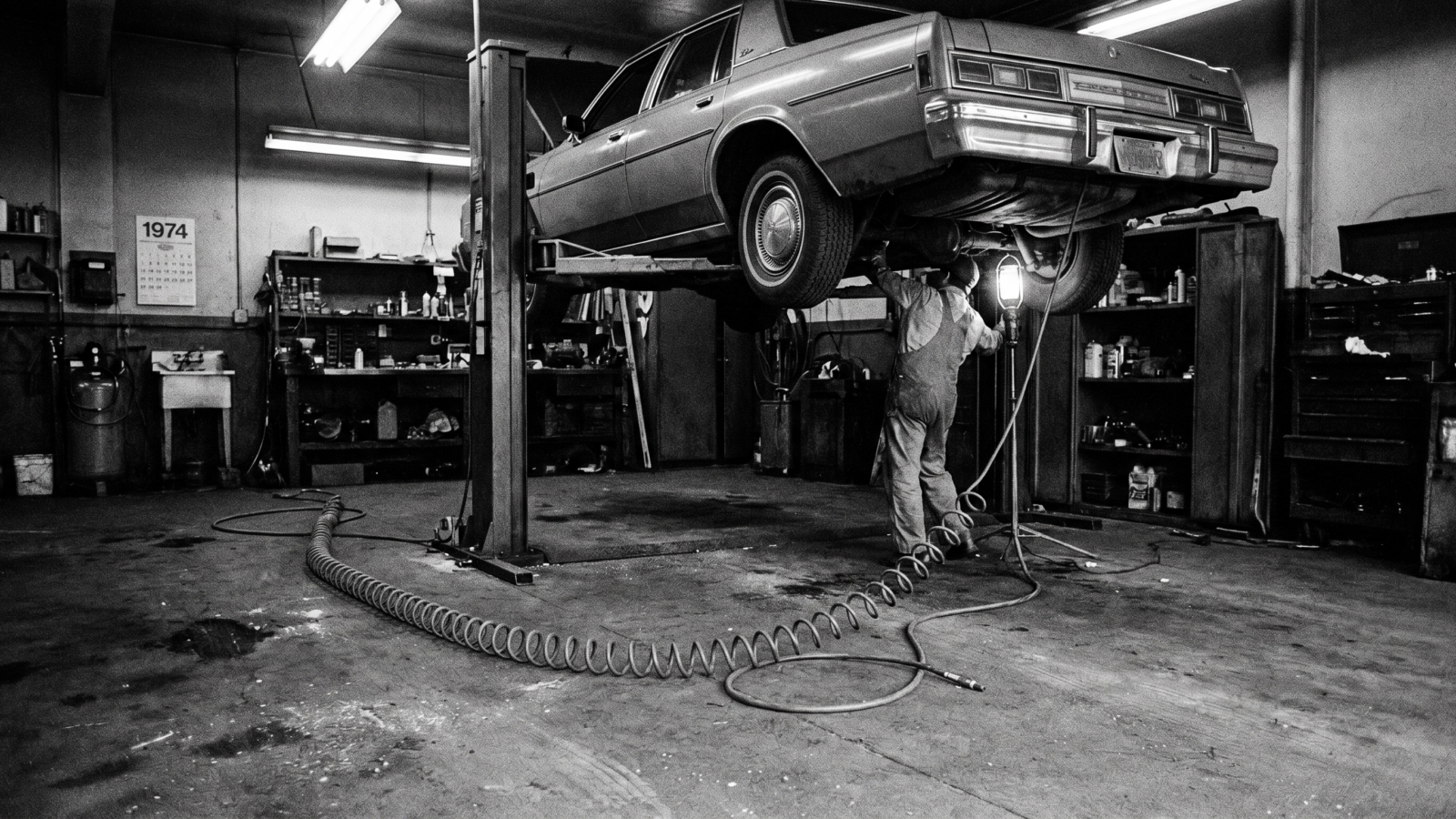
An automotive mechanic who retired in 1995 after forty years of brake work has a significantly elevated risk of developing mesothelioma. The disease process may have begun in his first year on the job — when he first used compressed air to blow out a brake drum and inhaled a cloud of dust that was, at the time, between 40 and 60 percent asbestos by weight. His employer didn’t warn him. The companies that made the brake pads knew.
For more than forty years, brake mechanics across America performed this task — standard shop practice, taught in trade schools, the accepted method — while the manufacturers of asbestos brake pads possessed internal research documenting exactly what those clouds of dust contained.
The Scale of Exposure
Chrysotile asbestos was used in virtually all automotive brake pads and linings manufactured in the United States through the early 1990s. Every vehicle on American roads during this period ran on asbestos brake systems. Every mechanic who performed brake service was a potential asbestos exposure case. The total population exposed through brake service work over the industry’s peak production years numbers in the millions.
The mesothelioma diagnoses being made today — given the disease’s 20-50 year latency period — represent exposures from the 1960s through the 1980s. Former mechanics are now in their sixties, seventies, and eighties: exactly the window when asbestos-related disease presents.
If This Investigation Affects You
If you worked as an automotive mechanic — performing brake jobs, clutch work, or handling gaskets during your career — and have been diagnosed with mesothelioma, multiple asbestos trust funds cover brake product exposure. The Pneumo Abex trust and the Federal-Mogul trust together hold over $3.3 billion. Most mechanics are eligible to file against both simultaneously.
Trust fund claims are subject to statutes of limitations — in most states, 2 to 3 years from the date of a mesothelioma diagnosis. Acting now preserves your options.
Get a Free Confidential Case Review →
No obligation. No upfront cost. Attorney advertising.
Why Compressed Air Was So Dangerous
Asbestos brake pads shed fibres during normal use, accumulating as dust inside the brake drum. When a mechanic used compressed air to clean that drum — the fastest and most effective method — the dust became airborne in an enclosed shop with limited ventilation. Industrial hygiene measurements taken in brake service environments during litigation proceedings documented asbestos concentrations that would today require full respiratory protection and hazmat protocols.
The brake pad manufacturers had access to equivalent data. They chose not to share it, change their product recommendations, or warn workers. The internal documents establishing this knowledge became evidence in thousands of mesothelioma lawsuits.
The Companies and Their Trust Funds
Raybestos-Manhattan — whose president co-authored the 1934 letter to Johns-Manville agreeing to suppress asbestos research — eventually became Pneumo Abex. The Pneumo Abex LLC Asbestos Settlement Trust holds $300 million covering Raybestos brake product exposure. The Federal-Mogul trust, at $3.0 billion, covers Fel-Pro gaskets. Bendix brake pads (now Honeywell) and Wagner brake products each have separate trusts. Most mechanics who performed brake work during the peak exposure period are eligible to file against multiple trusts simultaneously.
Who Qualifies and What to Do Now
Mechanics who performed brake service during the 1950s through early 1990s and have been diagnosed with mesothelioma or asbestosis have strong trust fund claims. You do not need to remember every brand name you encountered — mesothelioma attorneys maintain detailed product databases establishing which companies’ products were in use at specific shops and dealerships during specific time periods. Family members of mechanics — spouses who laundered work uniforms, children who spent time in the shop — may also have claims based on secondary asbestos exposure.
More from Worker Testimony