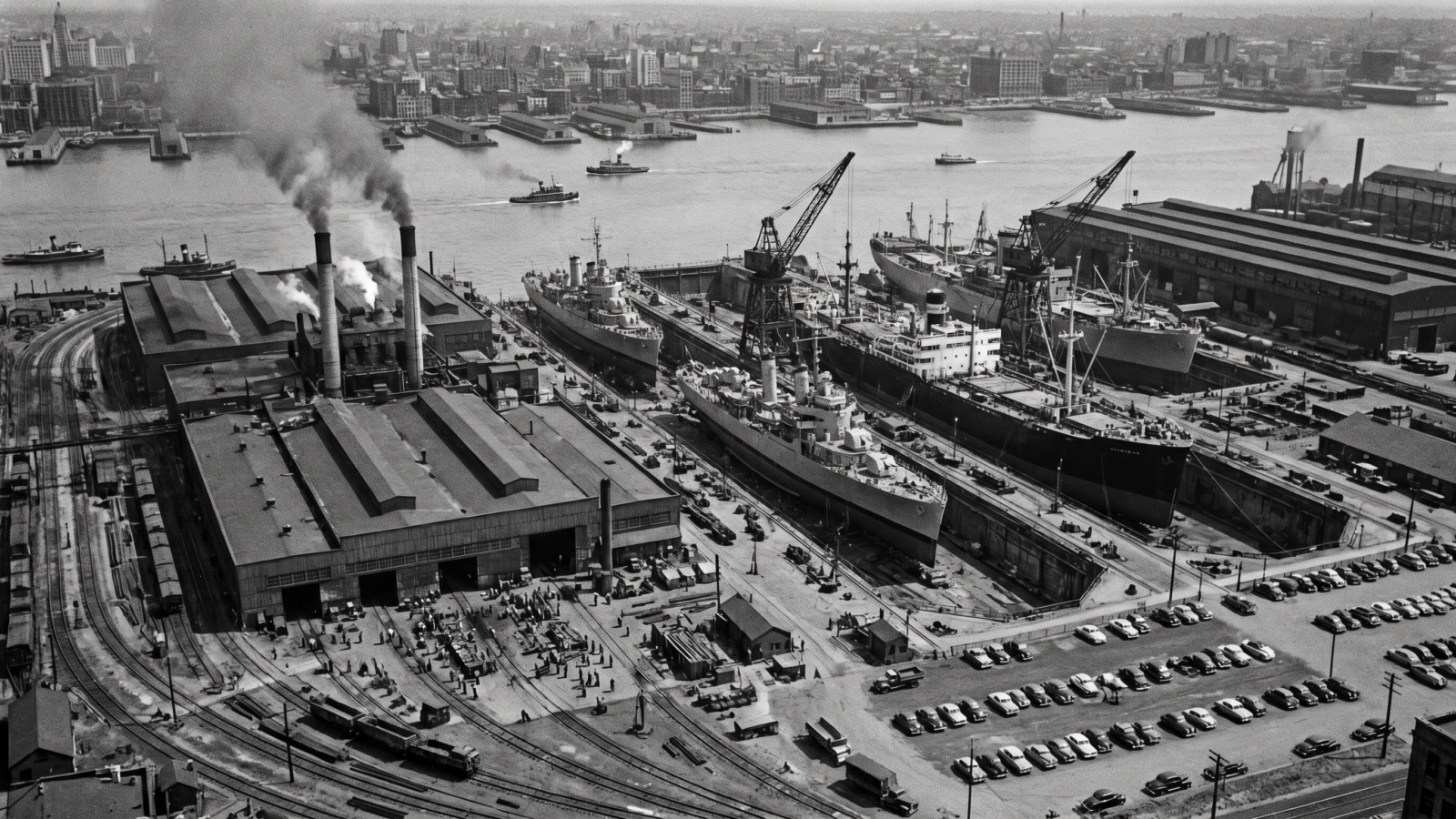
More than 30 percent of the approximately 3,000 Americans diagnosed with mesothelioma this year are veterans. Most served aboard US Navy vessels built between 1940 and 1975 — vessels that were insulated, from engine room to sleeping quarters, with asbestos. The companies that supplied that insulation knew it was lethal. The Navy knew the ships were dangerous. Neither told the men who worked below decks.
Forty to fifty years later, those men are getting the diagnosis. They have legal options most of them have never been told about — both through the VA and through the asbestos trust fund system. This investigation documents the scale of the exposure, who was most at risk, and what rights veterans have today.
The Build-Up
The United States entered World War II with a fleet that needed to expand by orders of magnitude. Between 1941 and 1945, American shipyards produced more than 1,000 major naval vessels. The materials used were those available in industrial quantities — and asbestos, with its heat-resistant and fire-retardant properties, was available in extraordinary quantities.
Johns-Manville, Pittsburgh Corning, Owens Corning, Combustion Engineering, and Babcock & Wilcox all held major contracts to supply insulation products to the Navy. Their products — Unibestos pipe insulation, Kaylo block insulation, thermal wrap for boiler systems — were installed throughout the fleet. The insulation contractors and the companies that supplied the products already knew, from their own internal research, that the material caused lung disease. No warnings were issued.
If This Investigation Affects You
If you served in the US Navy — particularly in engine rooms, boiler rooms, or shipyard environments — and have been diagnosed with mesothelioma, you may be entitled to both VA disability benefits and multiple asbestos trust fund claims simultaneously.
Trust fund claims are subject to statutes of limitations — generally 1 to 3 years from the date of a mesothelioma diagnosis, varying by state — not from the date of exposure. The claims process takes time. Acting now preserves your options.
Get a Free Confidential Case Review →
No obligation. No upfront cost. Initial communications are confidential. Attorney advertising.
The Men at Greatest Risk
Not all Navy service created equal asbestos exposure. The risk was concentrated among those who worked in specific spaces and roles: machinist’s mates and boiler technicians in engine rooms and firerooms, where asbestos insulation was densest and where maintenance work — replacing gaskets, repairing valves, working around pipe systems — routinely released fibres in confined, poorly ventilated spaces.
Shipyard workers who worked on vessels under construction or repair faced concentrated exposure during installation and removal of insulation. Removing old asbestos insulation for repairs — a routine maintenance task — generated fibre concentrations that industrial hygienists have described as among the highest occupational exposures ever documented.
The Latency Problem — and Why Time Matters Now
Mesothelioma has a latency period of between 20 and 50 years. A sailor exposed to asbestos in the engine room of a destroyer in 1965 may not develop mesothelioma until 2005 or 2025. This is why Navy veterans are still being diagnosed from exposure that occurred decades ago — and why the statute of limitations runs from the date of diagnosis, not the date of exposure.
A veteran diagnosed with mesothelioma in 2026 has a legally actionable claim regardless of when the exposure occurred. Most trust funds and VA benefit programs do not distinguish between recent and historical exposures. What matters is the diagnosis date and the documented exposure history.
VA Benefits and Trust Fund Claims — Both, Not Either/Or
Navy veterans with mesothelioma are entitled to two distinct and independent sources of compensation. VA disability benefits — monthly compensation at the 100 percent disability rating, currently over $3,700 per month — and asbestos trust fund claims against the manufacturers of the products used aboard their vessels. These are not mutually exclusive. Receiving VA benefits does not reduce trust fund claim eligibility, and vice versa.
An experienced mesothelioma attorney who works with veterans can coordinate both processes simultaneously, cross-referencing vessel records, Naval Technical Manuals, and ship logs to build a product exposure history even for veterans whose service ended fifty years ago.
More from Worker Testimony