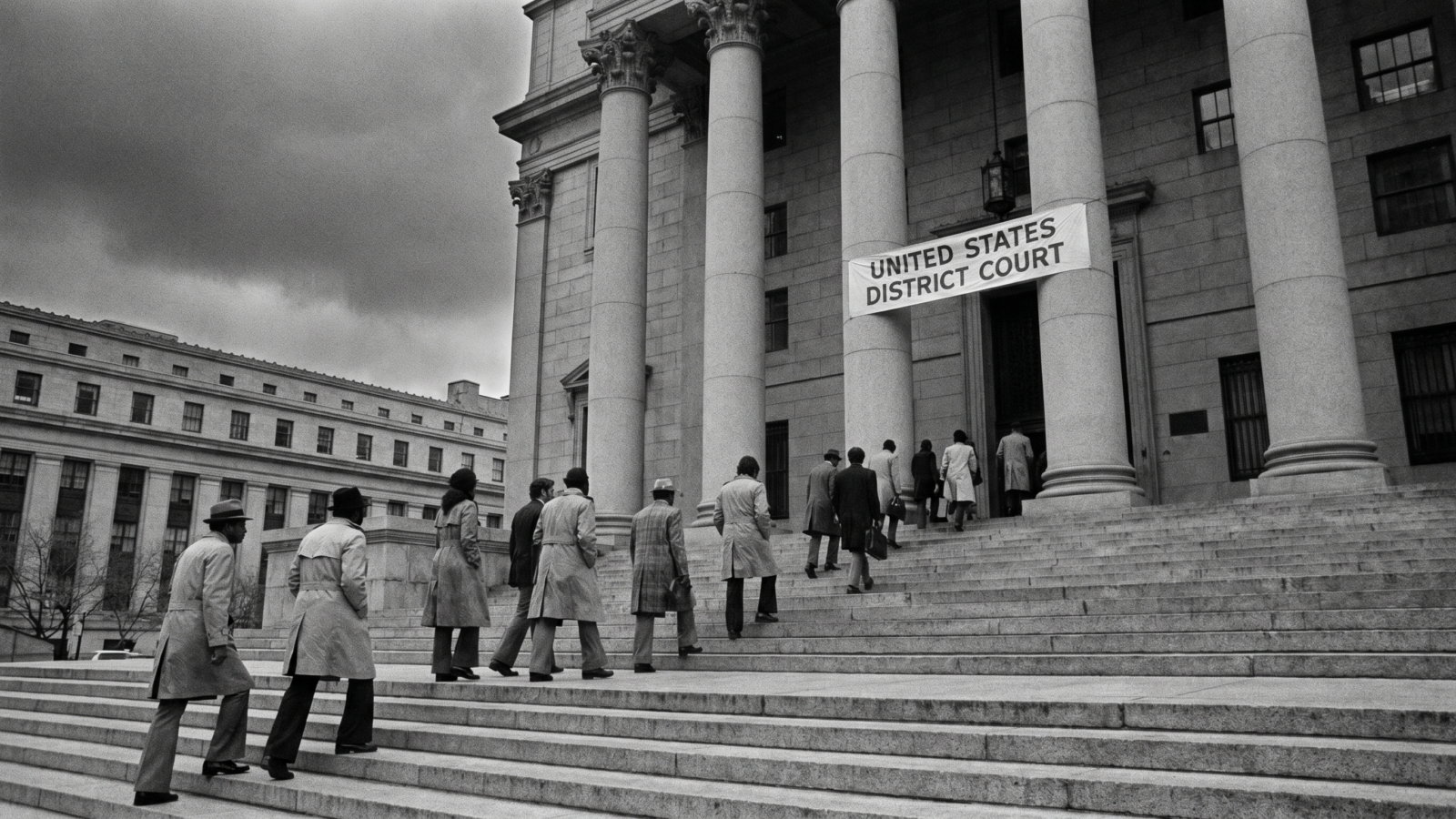
Clarence Borel died before he could hear the verdict in his own lawsuit. The insulation worker from Orange, Texas, who had spent his career handling asbestos products and developed fatal lung disease as a result, died of mesothelioma while his case was still on appeal. In October 1973, the Fifth Circuit ruled in his favor anyway. Clarence Borel never received a dollar of his judgment. But the ruling that came after his case changed everything — for every asbestos victim who came after him.
The Borel decision opened the litigation floodgates, established the legal framework for corporate liability that still governs asbestos claims today, and forced the internal documents of asbestos manufacturers into the public record for the first time. This is its story, and why it still matters in 2026.
The Legal Holding
The Fifth Circuit’s opinion, written by Judge John Minor Wisdom, established three principles that became foundational to all asbestos litigation that followed. First: asbestos product manufacturers had a duty to warn workers of known health hazards — and the hazards had been documented since at least the 1930s. Second: failure to warn was itself a defect making the product unreasonably dangerous, establishing strict products liability for asbestos without requiring proof of specific negligence. Third, and most consequentially: the internal corporate documents obtained through discovery in the Borel case entered the public record.
That third consequence changed the evidentiary landscape of asbestos litigation permanently. Once in the public record, those documents — showing what manufacturers knew and when — could be obtained by plaintiffs’ attorneys in every subsequent case.
If This Investigation Affects You
If you were exposed to asbestos products manufactured by the companies named in the Borel decision — Johns-Manville, Fibreboard, Eagle-Picher, Owens-Corning, or others — and have been diagnosed with mesothelioma, trust fund claims exist specifically because of the legal framework this case established. The Manville trust alone holds $2.5 billion.
Trust fund claims are subject to statutes of limitations — in most states, 2 to 3 years from diagnosis. Acting now preserves your options.
Get a Free Confidential Case Review →
No obligation. No upfront cost. Attorney advertising.
The Documents That Changed Everything
The Borel discovery materials included the Sumner Simpson Papers — the 1934–1935 correspondence between Raybestos-Manhattan and Johns-Manville arranging the suppression of asbestos health research. These documents had existed for nearly forty years. They had never been seen by a jury or entered into the public record. Borel changed that. The documentary foundation of asbestos corporate knowledge was now public, and no subsequent manufacturer could claim it didn’t exist.
The documents obtained in Borel and the cases that immediately followed it became the evidentiary spine of asbestos litigation for the next fifty years. They are the same documents referenced in virtually every trust fund’s eligibility determination — proof that the manufacturers knew, that the knowledge was corporate and systematic, and that the failure to warn was deliberate.
The Flood — and Where It Led
Before Borel, fewer than fifty asbestos lawsuits had ever been filed in the United States. In the years following the decision, filings grew exponentially. By 1982, when Johns-Manville filed for bankruptcy, over 16,500 cases were pending against the company alone. By the late 1990s, asbestos litigation had become the longest-running mass tort in American legal history, with over 700,000 plaintiffs having filed claims.
The bankruptcy trust system — which now holds over $32 billion across 60+ trusts — is the direct descendant of the Borel decision. It exists because Borel established that manufacturers were liable, that liability was provable, and that the documentary evidence to prove it was in the public record. Clarence Borel never collected his judgment. But the system built on his case has paid billions of dollars to the workers and families who came after him — and continues to pay today.
More from The Asbestos Files