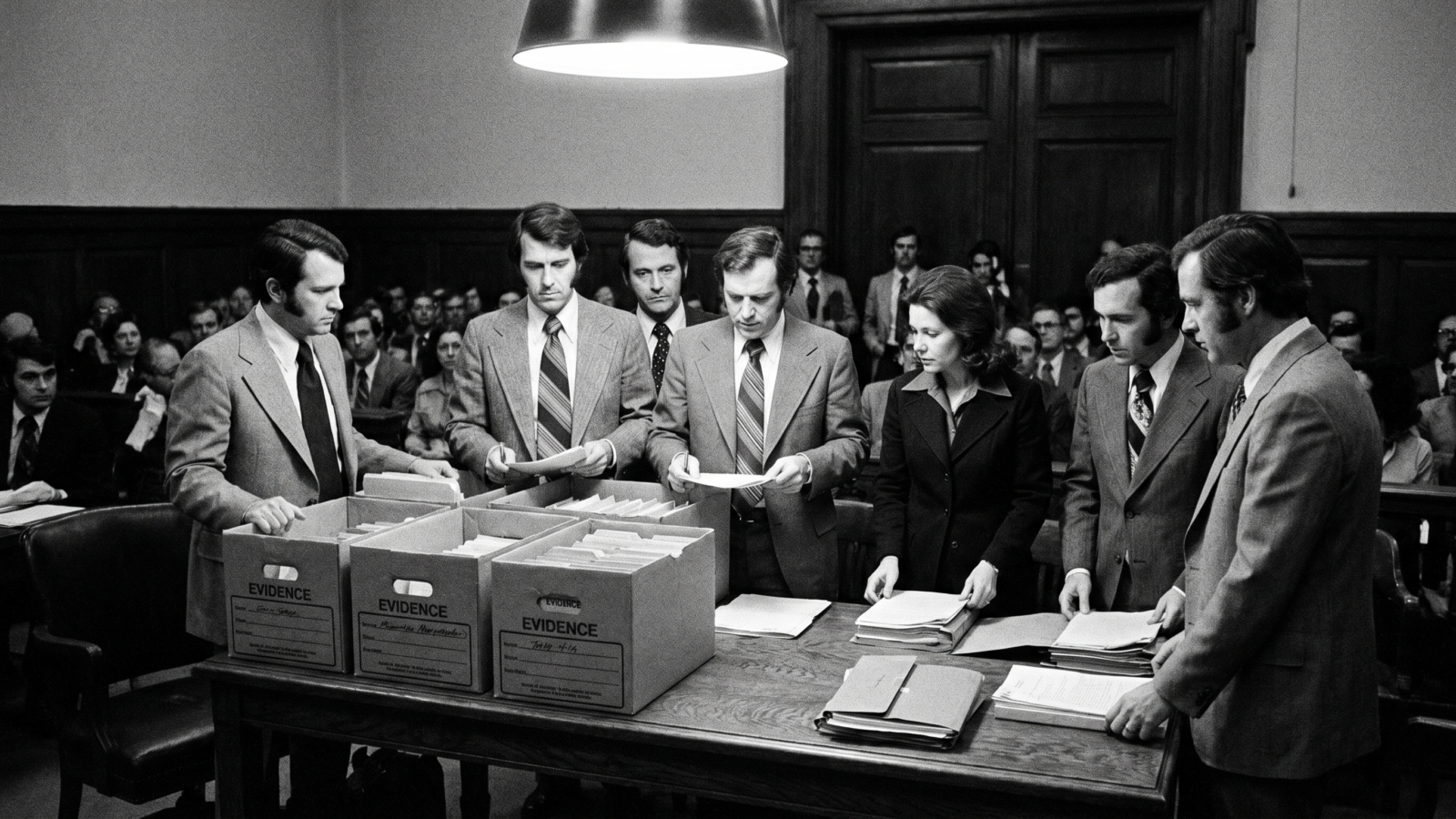
In 2021, Johnson & Johnson placed its talc liability into a newly created subsidiary called LTL Management, then immediately filed that subsidiary for bankruptcy — a maneuver designed to halt thousands of talc-related lawsuits and cap the company’s asbestos liability at a fraction of what courts might otherwise award. The strategy, known as the “Texas Two-Step,” allowed J&J itself to continue operating as a $400 billion company while its litigation exposure was funnelled into a controlled bankruptcy proceeding.
The legal battle over whether this maneuver was permissible has been contested in multiple federal courts. The Third Circuit Court of Appeals is the controlling authority on the bankruptcy proceedings. As of 2026, the case continues to work through the federal courts. Its outcome will determine how much compensation is available to the tens of thousands of women who filed claims alleging J&J’s talc products caused their ovarian cancer — and, in some cases, their mesothelioma.
The Talc-Asbestos Connection
Johnson & Johnson’s baby powder has been at the centre of asbestos-contamination allegations for more than two decades. Talc — the mineral used to make the powder silky — is mined from deposits that frequently occur in proximity to asbestos. Independent laboratory testing commissioned by plaintiffs’ attorneys, and internal J&J documents obtained through litigation discovery, raised questions about whether some J&J talc products contained asbestos fibres.
J&J has consistently denied that its talc products contained asbestos and maintained that its products are safe. The company discontinued talc-based Johnson’s Baby Powder in the United States in 2020 and transitioned to a cornstarch-based formula. It continues to sell talc-based powder in some international markets.
The Documents
In 2018, Reuters published an investigative report based on internal J&J documents showing that the company knew for decades that its talc sometimes tested positive for small amounts of asbestos, and that the company worked with its suppliers and regulators to address the problem while avoiding public disclosure. J&J disputed Reuters’ characterisation. The dispute over what the documents show has been litigated across the country, with juries awarding verdicts ranging from millions to billions of dollars against the company.
If This Investigation Affects You
If you or a family member used Johnson’s Baby Powder or other J&J talc products and have been diagnosed with mesothelioma or ovarian cancer, the Texas Two-Step bankruptcy does not necessarily eliminate your legal options. An attorney who specialises in talc and asbestos litigation can advise on the current status of the proceedings and what claims remain available.
Trust fund claims are subject to statutes of limitations — in most states, 2 to 3 years from the date of a mesothelioma diagnosis. Acting now preserves your options.
Get a Free Confidential Case Review →
No obligation. No upfront cost. Attorney advertising.
The Texas Two-Step — Why It Matters
The “Texas Two-Step” is a corporate restructuring strategy using a provision of Texas law allowing a company to split into two entities and assign liabilities to one of them. J&J created LTL Management to hold its talc liability, then had LTL file for bankruptcy. Plaintiffs’ attorneys argued this was an abuse of the bankruptcy system — that a $400 billion company was using bankruptcy not because it was financially distressed but as a litigation strategy to avoid jury verdicts that had, in some cases, exceeded $1 billion.
The Third Circuit Court of Appeals initially threw out J&J’s bankruptcy in 2023, ruling that LTL was not in financial distress. J&J refiled. The legal manoeuvring continues. If the bankruptcy is ultimately permitted to proceed, it would replace individual jury trials — where plaintiffs have won very large verdicts — with a trust fund settlement process that distributes a fixed pool across all claimants, likely at significantly lower average payouts.
What This Means for Asbestos Accountability Broadly
The J&J talc litigation is not, strictly speaking, a traditional asbestos case — the primary claims involve ovarian cancer caused by talc, not asbestos-caused mesothelioma. But it has significant implications for asbestos accountability more broadly. If the Texas Two-Step manoeuvre is ultimately validated, it provides a template that other companies facing large asbestos liabilities could use to limit their exposure.
It also represents the most prominent current example of a corporation using bankruptcy procedure as a litigation shield — a direct descendant of the strategy Johns-Manville pioneered in 1982, applied by one of the most profitable companies in the world in 2021. The accountability mechanism is the same. The scale of the target is different.
The Current Status — 2026
J&J has proposed a settlement fund — the amount has been revised multiple times, with proposals ranging from approximately $6.5 billion to $8 billion — to resolve all current and future talc-related claims. Plaintiffs’ attorneys have contested the adequacy of this amount, which represents less than three weeks of J&J’s annual revenue. The proceedings continue in the bankruptcy court, with oversight from the Third Circuit and the possibility of further Supreme Court review. Approximately 60,000 claimants have filed talc-related claims. The litigation is one of the largest mass tort proceedings in American history — and a live demonstration, fifty years after Borel v. Fibreboard, that the legal battles over corporate asbestos accountability are not over.
More from Legislative Failures